

Building community takes time
Don't give up – keep doing the daily work

Dear Soulful Revolutionary,
First, a quick update on my book project: I am currently working on chapter 10 of 12 and at 46,000 words, I have already surpassed the word count minimum, and will absolutely be needing to make significant cuts to be within my editor’s acceptable window. This is a very good problem — it’s easier to cut than to create whole cloth — even as it is emotionally devastating. My journalist educator father used to call it “killing your babies,” which, while graphic, is emotionally apt. (I can’t bear to delete a lot of my writing, so it goes into a separate “fragments” document – I always love hearing what other writers call their edited but un-killable words, so please share in the comments!)
The manuscript will go to my editor at the end of the summer, and then I’ll be deep in revisions territory this fall. Thank you as always for your support of me in this space, and for your patience as I write less here so I can write Becoming Soulful Revolutionaries. I couldn’t do this work without you, and I carry you with me in my heart into every writing session, in hopes that my words will be useful to others. Thanks for being the realest.
Now for today’s essay:
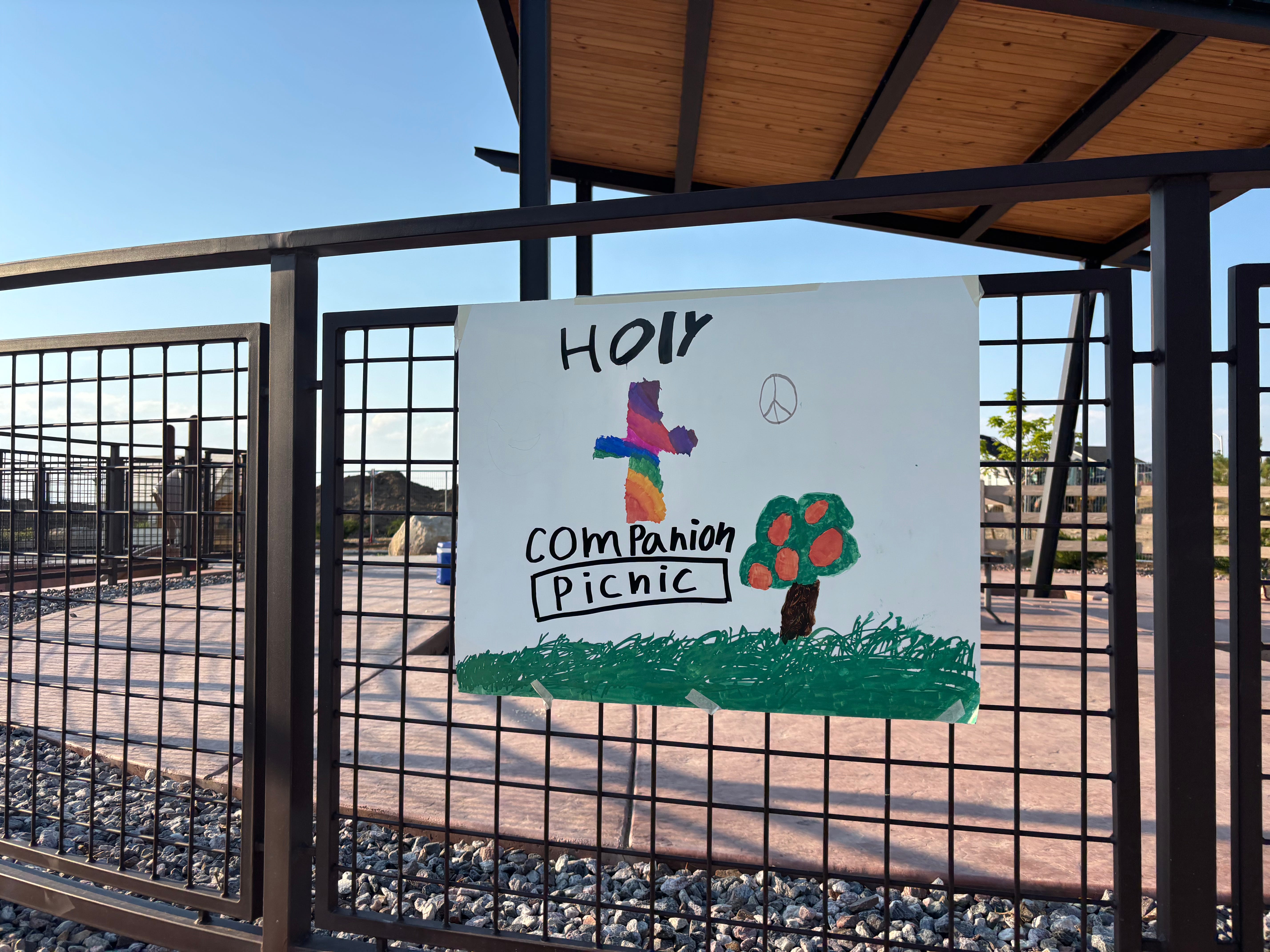
On Sunday evening, my church, Holy Companion, hosted a picnic at a local park. Several new folks joined us, and I watched in awe as people who have been part of our church for a while – from a few months to a few years – deftly wove them into conversation and community. Children who call our church home showed new friends the ropes on the playground. It was an intergenerational, multiracial group made up of people with diverse abilities, cultures and religious backgrounds. A whole beautiful ecosystem of care and curiosty.
My heart was so full of gratitude when I got home as I reflected on how this community has grown over the last three years. This growth has taken place in slow, often invisible ways. But when I step back to see the bigger picture, it is clear that the seed of an idea that was planted in me a few years ago has blossomed into a full-fledged community, now bearing fruit in ways I could not have even imagined. Tending this garden now belongs to all of us.
One of the most important lessons I’ve learned in three years as a church planter is this:
True community-building takes time.
There is no magic formula (anyone who tells you otherwise is, obviously, selling something). This is because trust must be earned one relationship, one conversation, one story at a time.
All the community organizing strategies in the world are nothing if you don’t care about the human sitting across the table from you. People can smell a bait and switch a mile away. It’s hard to fake genuine care and curiosity.
So from the beginning, I chose to be vulnerable.
I didn’t show up with bold visions and a three-point plan. I told folks we were a funky little church plant trying to be a place of hospitality to people who have been hurt by church. I shared the ways in which I have been hurt by church and listened to others’ stories of their religious trauma. I didn’t promise that we’d be perfect. I said we would hold one another accountable— holding our relationships as sacred and telling the truth about power.
Our leadership decided early on that we didn’t want a flash-in-the pan community based on big ideas and little substance. We wanted to build at the speed of trust, working within the constraints of people’s actual lives, not burning out people or relationships for the sake of quick growth. That looked like only meeting once a month for the first year, twice a month for the second year, and now three or four times a month in our third year. It meant being honest about our capacities — energy, time, money and more — and doing our best to respect and honor them.
We wanted a durable community that could work through conflict together, based on a rigorous commitment to shared values. That meant we had to go through some hard stuff together, building on existing practices of repair while cultivating new ones. We created space regularly for people to name tensions that were coming up for them, and ways to work through together. When organic tensions and even conflict have arisen, we have done our best to attend to them promptly and courageously together.
Staying with the sacred work of listening, remaining in relationship through conflict, and building systems that serve people— not just themselves— are all part of the scaffolding that holds up a community.
And there’s no good way to do that quickly.
It takes faithfulness over the long haul — what church planter and writer Eugene Peterson famously called “a long obedience in the same direction” – to start something new, let alone something that will last.
I’m immensely grateful for the quiet voice of Spirit within me (echoed by the very best of mentors and friends), that has consistently reminded me to do the humble work of planting seeds of relationship, watering them, nurturing tender plants, all while trusting the outcome of the garden to Creator.
To put that in less explicitly spiritual terms: letting go of the outcome, and trusting that the work of relationship-building is good in and of itself, may well be the most important thing I ever learn to do.
I don’t know how long this community I have planted will exist in the form that it does. Growth and change are inherent to a healthy ecosystem. Trusting this transformational process includes a robust belief that the work of cultivating community is worthwhile for a particular season. However long that season proves to be, it is a gift to see a garden grow.
I wonder: What helps you stay the course of building community? What growth have you observed in the communities you are part of? What helped foster that growth?
All my churches grew. Nothing fantastic. Two things I did offer were
an interesting sermon two out of four Sundays. Never knew which.
Two churches built new sanctuaries.
The other thing that I cared for them. That word got out.
And teaching. Not just scripture and its history, but the tradition and some doctrine as well.
By luck I had great musicians. But as a traditional Lutheran.
Because I had a social work background, I reached out into the community as well.
I didn't go into entertainment music, but did update the music with
GIA or Marty Haugen.
Good luck. It a lot of work. But the bet kind.
Don Marxhausen, Pastor
“A whole beautiful
ecosystem of care and
curiosity,” yes!